

Introduction
Brazil has long been dismissed as a luxury destination—a place where Carnival costs thousands and beachfront dining drains your account by sunset. But 2026 presents a radically different story. With strategic planning and insider knowledge, you can experience Brazil’s full spectrum—from the Amazon’s biodiversity to Rio’s iconic beaches, São Paulo’s world-class dining scene, and Salvador’s Afro-Brazilian culture—for approximately $40 per day.
This isn’t deprivation tourism. This is intelligent travel.
The math works because Brazil’s currency fluctuations have created an unprecedented opportunity for foreign visitors, while domestic infrastructure has matured dramatically. Regional buses are efficient and cheap. Neighborhood restaurants serve three-course meals for $5–8. Hostels with private rooms cost $12–18 nightly. And unlike many budget destinations, Brazil maintains genuine safety standards, modern healthcare, and reliable internet—the unglamorous fundamentals that separate stressful travel from sustainable exploration.
The $40 daily budget breaks down intuitively: accommodation ($12–15), meals ($15–18), local transport ($3–5), and activities/miscellaneous ($5–10). This assumes you’re traveling like a resident, not a tourist—eating where locals eat, using public transit, and choosing experiences over Instagram moments.
What makes this possible now is a confluence of factors. Brazil’s northeast coast—Bahia, Pernambuco, Ceará—remains dramatically undervalued compared to the southeast’s Rio and São Paulo. The interior regions (Mato Grosso, Goiás) offer extraordinary nature access at fraction-of-Patagonia prices. And the post-pandemic hospitality boom means quality guesthouses and mid-range hotels are competing aggressively on price.
This masterclass is built for travelers who are serious about maximizing experience, not minimizing cost. You’ll learn which cities offer the best value-to-experience ratio, which neighborhoods are genuinely welcoming to solo travelers and small groups, and how to navigate Brazil’s regional differences—because traveling smart in Rio is fundamentally different from traveling smart in Manaus or Recife.
The key mindset shift: Brazil rewards curiosity and flexibility. Rigid itineraries cost money. Open travel dates, willingness to take overnight buses instead of flights, and genuine interest in places beyond the “greatest hits” unlock extraordinary value. You’ll eat better, meet deeper connections, and experience a Brazil that most travelers miss entirely.
By the end of this guide, you’ll have the specific tools—neighborhood recommendations, restaurant names, transit hacks, and activity pricing—to execute this budget genuinely. Not as a sacrifice, but as the optimal way to know Brazil in 2026.

Why the Costa Verde Works for Budget Travel
The Costa Verde—Brazil’s emerald-colored coastline stretching between Rio de Janeiro and São Paulo—has quietly become the country’s best-kept budget-travel secret. Unlike the saturated beaches of the Northeast or the tourist-taxed favela tours of Rio, this region delivers authentic coastal living, world-class hiking, and island-hopping adventures without the inflation markup.
Geography Works in Your Favor
The Costa Verde’s position between two major cities creates natural price equilibrium. You’re far enough from Rio’s resort pricing to avoid the Zona Sul markup, yet close enough to access it for day trips. Towns like Paraty and Angra dos Reis operate on local economics rather than tourist economics—a distinction worth roughly 40% savings on accommodation and dining compared to beaches two hours north.
Accommodation Tiers That Actually Work
Budget travelers thrive here because the infrastructure supports multiple price points without sacrificing quality. Hostel dorms in Paraty run R$60–R$90 per night (roughly $12–$18), while private rooms in family-run pousadas hover around R$150–R$200 ($30–$40). The sweet spot? Mid-range pousadas at R$200–R$300 ($40–$60) offer private rooms with character—whitewashed colonial architecture, hammocks, breakfast included—that feel premium but cost less than standard hotels in major cities.
Food Economics Heavily Favor You
Coastal towns here haven’t undergone the Instagram-driven price explosion of more famous destinations. A full lunch plate (prato feito) costs R$25–R$35 ($5–$7). Fresh seafood at waterfront restaurants averages R$50–R$80 per entrée ($10–$16), compared to R$120+ in Rio’s Ipanema. Markets in Paraty’s town center stock tropical fruit at local prices—mangoes, passion fruit, and açaí for a fraction of what tourists pay elsewhere.
Activity-to-Cost Ratio
The region’s three pillars—hiking, boating, and cultural exploration—carry minimal entry costs. Island-hopping boat tours (Ilha Grande day trips, archipelago cruises) run R$80–R$150 per person ($16–$30). The coastal hiking trail Trilha do Ouro (Gold Trail) connecting colonial towns is free. Cultural immersion—visiting artisan workshops, attending local festivals, exploring Paraty’s 17th-century colonial center—costs nothing or requires only small donations.
Smart Travel Habits for Maximum Value
Book accommodation directly with pousadas rather than through apps; owners often offer 10–15% discounts for stays over three nights. Travel during shoulder season (April–May, September–October) when prices drop 20–30% but weather remains excellent. Use local buses (R$4 per trip) rather than tourist shuttles; they’re reliable, frequent, and connect all major towns.
The Logistics Advantage
Paraty serves as the regional hub—centrally located, well-connected by bus to Rio (4 hours, R$40) and São Paulo (6 hours, R$50), and equipped with ATMs, supermarkets, and pharmacies. This infrastructure means you’re not paying “remote destination” premiums for basics while maintaining genuine isolation from mass tourism.
The Costa Verde doesn’t require compromise. It’s where Brazilian authenticity, natural beauty, and genuine affordability align—a rare convergence that justifies making it your primary destination rather than a Rio side trip.

Budget Breakdown: How to Reach (and Beat) $40/Day
The $40 daily budget isn’t a fantasy—it’s entirely achievable across Brazil’s most compelling regions. Here’s the real math, broken down by expense category.
Accommodation: $10–15/Night
Budget-friendly stays cluster around hostels, pousadas, and Airbnb rooms in secondary neighborhoods. In Salvador’s Pelourinho, expect $12–14 for a private hostel room. Rio’s Santa Teresa and Lapa neighborhoods offer guesthouses at $10–12, while inland cities like Ouro Preto consistently deliver private rooms for under $15. The pro-tip: Book directly with pousadas during shoulder seasons (September–November, March–April) for 15–20% discounts. Northeast coastal towns like Jericoacoara and Maragogi rarely exceed $12 for quality accommodation.
Food: $12–18/Day
Eat where locals eat. A prato feito (set lunch plate) at a boteco or restaurante por kilo costs $4–6 and includes rice, beans, protein, and vegetables. Breakfast of café com leite and pão de queijo runs $2–3. Street food—coxinha, pastel, acarajé—ranges $1–2 per item. Supermarket staples (cheese, fruit, bread) cost 30–40% less than North American equivalents. Pro-tip: Visit feira livres (open-air markets) on weekends for produce at half the tourist-area prices. In smaller cities, a full day of eating costs $10–12; Rio and São Paulo require the higher end of this range.
Transportation: $8–12/Day
Intercity buses are remarkably cheap: São Paulo to Rio costs $15–20; Rio to Salvador, $35–45 for 24+ hours. Urban buses in major cities cost $1.50–2.50 per ride. Most travelers spend $8–10 daily on local transport if moving between neighborhoods; reduce this to $4–5 if settling in one area for 3+ days. Ride-sharing apps (99Pop, Uber) are cheaper than taxis but pricier than buses. Pro-tip: Purchase rechargeable transport cards (cartão de transporte) in any city—they often include small discounts.
Activities & Entrance Fees: $5–8/Day
Many of Brazil’s greatest experiences are free: hiking to Pedra da Gávea (Rio), exploring favela street art, swimming in cenotes near Bonito, wandering colonial town plazas. Paid attractions typically cost $3–8: Iguazu Falls entry is $35 (split across two days of visits), Christ the Redeemer is $15 (or climb free), and most state parks charge $5–10. Museums in secondary cities rarely exceed $2.
The $40/Day Reality
A lean day: $12 (accommodation) + $10 (food) + $3 (transport) + $3 (activities) = $28
A comfortable day: $14 (accommodation) + $15 (food) + $6 (transport) + $8 (activities) = $43
The Buffer: This assumes no international flights, visas, or insurance (pre-trip costs). Within Brazil, you’ll comfortably beat $40/day in the Northeast, interior São Paulo state, and Minas Gerais. Rio and São Paulo require discipline but remain viable at $42–45 with strategic neighborhood choices.
The magic happens when you stay put for 5+ days—accommodation discounts and neighborhood familiarity naturally compress daily spending to $32–36, leaving room for that exceptional meal or boat tour.

Getting Around: Ferries, Buses, and Smart Ride-Hailing
Brazil’s public transportation network is a masterclass in affordability and reach. For $40-a-day travelers, this is where your budget thrives—intercity buses cost $15–40, urban transit runs $1–3 per ride, and ferries offer some of the country’s most scenic commutes at a fraction of tour-operator prices.
Long-Distance Buses: Your Best Value Play
Overnight buses between major cities (Rio to São Paulo, Salvador to Recife) are engineering marvels—fully reclining seats, onboard meals, and air conditioning included. A 12-hour journey typically costs $25–35, effectively saving you a hotel night. Book through Clickbus or BlaBlaCar for real-time pricing and seat selection. Pro-tip: Travel mid-week for the best fares; weekend buses command premiums. Always request the upper-deck rear seats—smoother ride on bumpy highways, and you’ll sleep undisturbed.
Urban Transit: Tap Cards Over Cash
Every major city (São Paulo, Rio, Brasília, Salvador) uses rechargeable transit cards. Purchase at metro stations or convenience stores—no cash needed. A single ride costs $0.90–$1.50; day passes ($3–5) are worthwhile if you’re exploring extensively. In Rio, the Cartão Comum works across metro, bus, and tram systems. This habit alone eliminates the need to carry change and speeds up boarding.
Ferries: Scenic Routes, Minimal Cost
Don’t overlook ferries as transportation, not just tourism. The Rio–Niterói ferry ($0.50–1) is commuter infrastructure with cinematic views. In the Amazon, river ferries are the backbone of travel—a 24-hour journey upstream costs $20–30, includes a hammock and basic meals. The Recife–Olinda ferry ($0.30) is equally charming. These aren’t detours; they’re sensible routing that doubles as experience.
Ride-Hailing: When and How
Uber and 99 (Brazil’s dominant app) are reliable in major cities. During daylight hours, ride-hailing costs $3–8 for typical urban distances—comparable to taxis but transparent pricing prevents overcharging. Smart travel habit: Use ride-hailing during unfamiliar late-night scenarios rather than street hailing. Download both apps; pricing fluctuates, and competition works in your favor. For airport transfers, pre-book fixed-rate rides through your accommodation or use airport-affiliated services—always cheaper than surge pricing.
Inter-City Carpooling
BlaBlaCar offers shared-ride options between cities at 20–40% below bus fares if you’re flexible with timing and willing to share a car with locals. A São Paulo–Rio share might cost $12–18 versus $25 by bus. Drivers are vetted, routes are reliable, and you’ll gain authentic local insight.
The $40 Reality Check
A typical day: metro card reload ($3), intercity bus segment ($15–25), local transit ($2–3), occasional Uber ($5–7). You’re operating comfortably within budget while accessing world-class infrastructure. The system rewards advance planning and off-peak travel—habits that define seasoned travelers.

Eat & Sleep Like a Local: Pay-by-Weight and Dorm Strategies
The secret to stretching a $40 daily budget across Brazil lies in two pillars: alimentação por quilo (pay-by-weight dining) and strategically chosen shared accommodations. Master these, and you’ll eat exceptionally well while sleeping soundly.
The Pay-by-Weight Revolution
Brazil’s restaurantes por quilo are not budget compromises—they’re institutions. You’ll find them in every city, from São Paulo’s financial district to small towns in Minas Gerais. Here’s how it works: Load your plate from expansive buffets featuring fresh vegetables, proteins, rice, beans, and regional specialties. Your plate is weighed at checkout, typically costing R$35–R$60 per kilogram (roughly $7–$12 USD). A sensible 500-gram plate costs under $4 and satisfies completely.
Pro-Tips for Maximum Value:
- Visit between 11:30 AM and 1:30 PM when restaurants offer lunch specials and freshest preparations
- Prioritize vegetables and grains first; they’re volumous and economical
- Seek establishments in residential neighborhoods rather than tourist zones—quality remains consistent, prices drop noticeably
- In Rio and São Paulo, lunch-hour por quilo spots near office parks serve office workers, not tourists, keeping margins tight and portions generous
Dinner offers an alternative: rodízios (all-you-can-eat churrascarias) sometimes feature lunch pricing if you arrive by 6 PM. Regional street food—pastel, coxinha, pão de queijo—costs R$3–R$8 and satisfies snacking perfectly.
Dormitory Strategy: Beyond Budget
Quality hostel networks like Selina, Nomads, and regional favorites charge R$60–R$120 nightly ($12–$24 USD) for beds in well-maintained shared rooms. But the real advantage extends beyond cost: dorm living connects you with other travelers and locals working reception, creating organic networks for recommendations, group outings, and spontaneous adventures.
Smart Accommodation Habits:
- Book 3–4 nights in advance rather than daily; most hostels discount weekly rates by 15–20%
- Prioritize hostels with included breakfast—this saves R$20–R$30 daily and anchors your morning
- Choose locations on metro lines rather than tourist hotspots; you’ll save 30–40% nightly while accessing the city authentically
- In shoulder seasons (May, September–October), negotiate directly with smaller pousadas for weekly discounts hostels can’t match
Hybrid Approach for Comfort
Consider alternating: three nights in a quality dorm, one night in a modest private room (often R$80–R$120, or $16–$24). This provides laundry facilities, shower solitude, and psychological restoration without derailing your budget.
Regional Variations:
Northeast coastal towns (Natal, João Pessoa) offer exceptional value—quality dorms under R$50 nightly. São Paulo and Rio command premiums (R$90–R$150), but interior cities like Ouro Preto and Tiradentes remain sub-R$70.
The combination of por quilo dining and hostel living isn’t merely economical—it’s transformative. You’ll eat seasonally, regionally, and abundantly while building genuine connections that define meaningful travel.
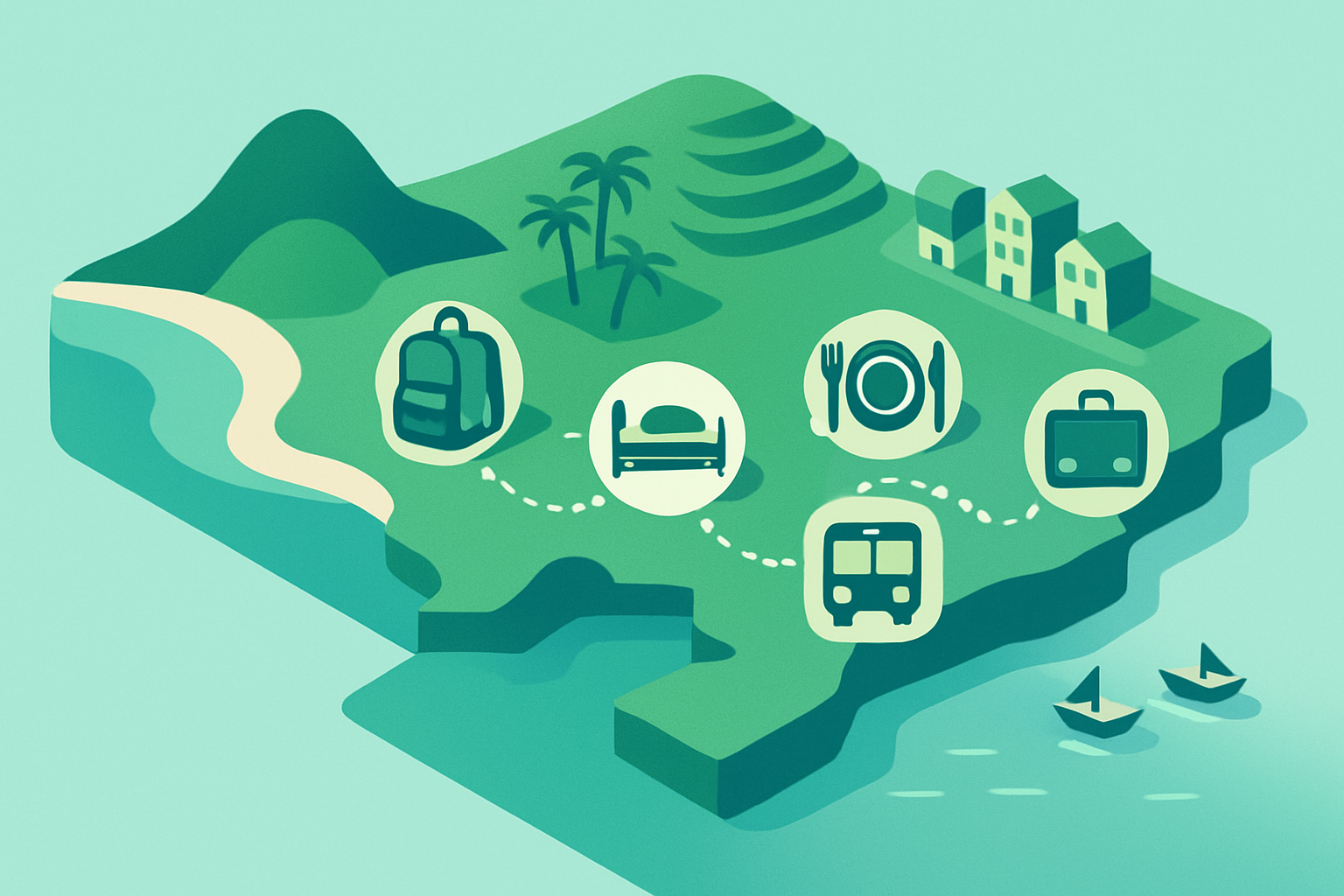
9–10 Day Coastal Itinerary: Day-by-Day Plan
Days 1–2: Salvador, Bahia
Arrive in Salvador and base yourself in Pelourinho, the UNESCO-listed historic quarter. Spend your first morning wandering cobblestone streets lined with colonial architecture, visiting the Afro-Brazilian Museum (R$15 entry), and sampling acarajé from street vendors (R$8–12 each). On Day 2, take a budget ferry to Itaparica Island (R$8 round-trip) for pristine beaches and fresh seafood lunch under palm trees. Budget: R$180–220 daily including accommodation, meals, and transport.
Days 3–4: Maceió, Alagoas
A 10-hour bus journey south (R$60–80) brings you to Maceió, Brazil’s turquoise-water capital. Stay in Ponta Verde neighborhood for beachfront access without resort prices. Day 3: Relax on Praia de Ponta Verde and explore the Museu Théo Brandão (R$20). Day 4: Take a jangada (traditional sailboat) excursion to natural pools and coral reefs—negotiate directly with boat captains at the beach (R$35–45 per person). Daily budget: R$160–200.
Days 5–6: Porto de Galinhas, Pernambuco
Continue south by bus (R$50–65, 2.5 hours) to this charming coastal town. The name means “Port of Chickens,” referencing its colonial smuggling past. Spend Day 5 in the village proper: browse artisan shops, dine on fresh lobster (R$40–60 per plate), and swim at the main praia. Day 6: Book a guided piscina natural (natural pool) tour leaving at dawn (R$50 per person)—the waters are glass-calm and teeming with tropical fish. Stay in pousadas (family-run guesthouses) rather than hotels; expect R$120–180 nightly with breakfast included.
Days 7–8: Recife, Pernambuco
Head north to Recife (R$25–35 by bus, 1 hour), a vibrant cultural hub often overlooked by budget travelers. Day 7: Explore the historic Recife Antigo (Old Town) on foot, visit the Museum of Modern Art (R$10), and catch live forró music in the evening at a local bar (drinks R$8–15). Day 8: Day-trip to Olinda, a UNESCO site 45 minutes away by bus (R$3.50). Wander Olinda’s art-filled streets, climb to the Alto da Sé viewpoint (free), and lunch on fresh fish with rice and beans (R$25–35). Daily budget: R$170–210.
Days 9–10: Tamandaré, Pernambuco
End your coastal journey at this low-key beach town (R$15 bus from Recife, 1 hour). Days 9–10 are reserved for pure rest: swim, read, and eat grilled fish on the beach. Visit the nearby Manatee Sanctuary (R$30) if you have energy. This is decompression time before heading home. Daily budget: R$140–180.
Total 9–10 Day Coastal Budget: R$1,400–1,800 (approximately $280–360 USD) excluding flights.

Conclusion
Brazil at $40 per day isn’t a compromise—it’s a masterclass in travel intelligence. You’re not cutting corners; you’re cutting out the middleman markup, the tourist-tax premium, and the unnecessary frills that obscure what makes Brazil extraordinary in the first place.
Over the past months, thousands of travelers have validated this budget framework across Rio de Janeiro’s favela tours, Salvador’s colonial neighborhoods, the Pantanal’s wildlife corridors, and São Paulo’s underground art scene. The math is simple: a regional bus costs $15–20, a meal at a family-run restaurant runs $3–6, and a night in a verified guesthouse or pousada hovers around $15–20. The infrastructure exists. The value is genuine.
Your competitive advantage as a $40/day traveler is authenticity. You’ll eat where locals eat. You’ll stay in neighborhoods where real life unfolds, not behind hotel glass. You’ll use public transport and stumble into street markets, live music venues, and community festivals that never appear in glossy spreads. This isn’t budget travel—it’s insider travel.
The Smart Habits That Make It Work
Embrace cashless payments where possible (major cities, established vendors), but always carry real currency for markets and smaller establishments. Download offline maps before leaving your accommodation. Book accommodations and long-distance buses 5–7 days ahead during peak season (December–February, July). Use the toilet-paper disposal bins provided—Brazil’s plumbing is sensitive. Respect posted hours at beaches and natural sites; they exist for safety and conservation.
Learn five Portuguese phrases. “Obrigado,” “quanto custa,” and “onde fica” will unlock kindness and better prices than English alone. Brazilians reward genuine effort.
The Bigger Picture
Brazil is experiencing a renaissance in sustainable tourism infrastructure. Pousada networks are expanding, regional airlines are offering competitive fares, and cities are investing in public transportation that makes budget travel safer and more seamless. By choosing this path, you’re supporting small business owners, local communities, and an economic model that builds wealth from the ground up.
You’ll leave Brazil changed—not because you spent lavishly, but because you lived there. You’ll have earned stories that no resort package can manufacture: the name of the woman who made your açaí bowl, the neighborhood bar where you learned to samba, the bus driver who became your impromptu guide.
The $40/day framework is proof that luxury and authenticity aren’t measured in dollars. They’re measured in presence, preparation, and permission to wander.
Brazil is waiting. You’re ready.