Introduction
Brazil is calling—and 2026 is the year to answer. Whether you’re a first-time visitor eyeing Rio’s iconic beaches or a returning traveler ready to explore beyond the postcard views, understanding Brazil’s visa landscape is your first step toward seamless travel. For citizens of the United States, Canada, and Australia, the rules are straightforward, the process is increasingly digital, and the payoff is immeasurable.
This guide cuts through the bureaucracy. We’ll walk you through exactly what you need—visa requirements, processing timelines, documentation checklists—so you can spend less time in airport queues and more time experiencing one of the world’s most vibrant destinations. Rio de Janeiro will serve as our anchor, but the principles apply whether you’re heading to São Paulo’s art scene, Salvador’s colonial charm, or the Amazon’s untamed wilderness.
The beauty of traveling to Brazil in 2026 is timing. Recent streamlining of consular processes means faster approvals. Digital visa applications have reduced paperwork friction. And Rio, as host of the 2016 Olympics and a city that welcomes over 2 million international visitors annually, has refined its infrastructure for traveling professionals and leisure seekers alike.
What makes this moment special: Brazil is increasingly organized for international visitors without sacrificing its authentic character. You’ll find yourself in a country where modern convenience meets cultural richness—where you can book a beachfront dinner reservation via app, then spend the evening watching a sunset that feels untouched by time.
This guide is built for the discerning traveler. We assume you’re detail-oriented, you plan ahead, and you want reliable information—not guesswork. Each section is designed to be practical and immediately actionable, whether you’re reading this six months before departure or finalizing logistics two weeks out.
By the end, you’ll know your visa category, understand processing times specific to your citizenship, have a master checklist of required documents, and hold a strategic plan for your Rio getaway (or your broader Brazilian adventure). You’ll travel with confidence, knowing you’ve handled the administrative side with precision.
Brazil rewards preparation. Let’s begin.
Who Needs the 2026 e-Visa and How to Apply
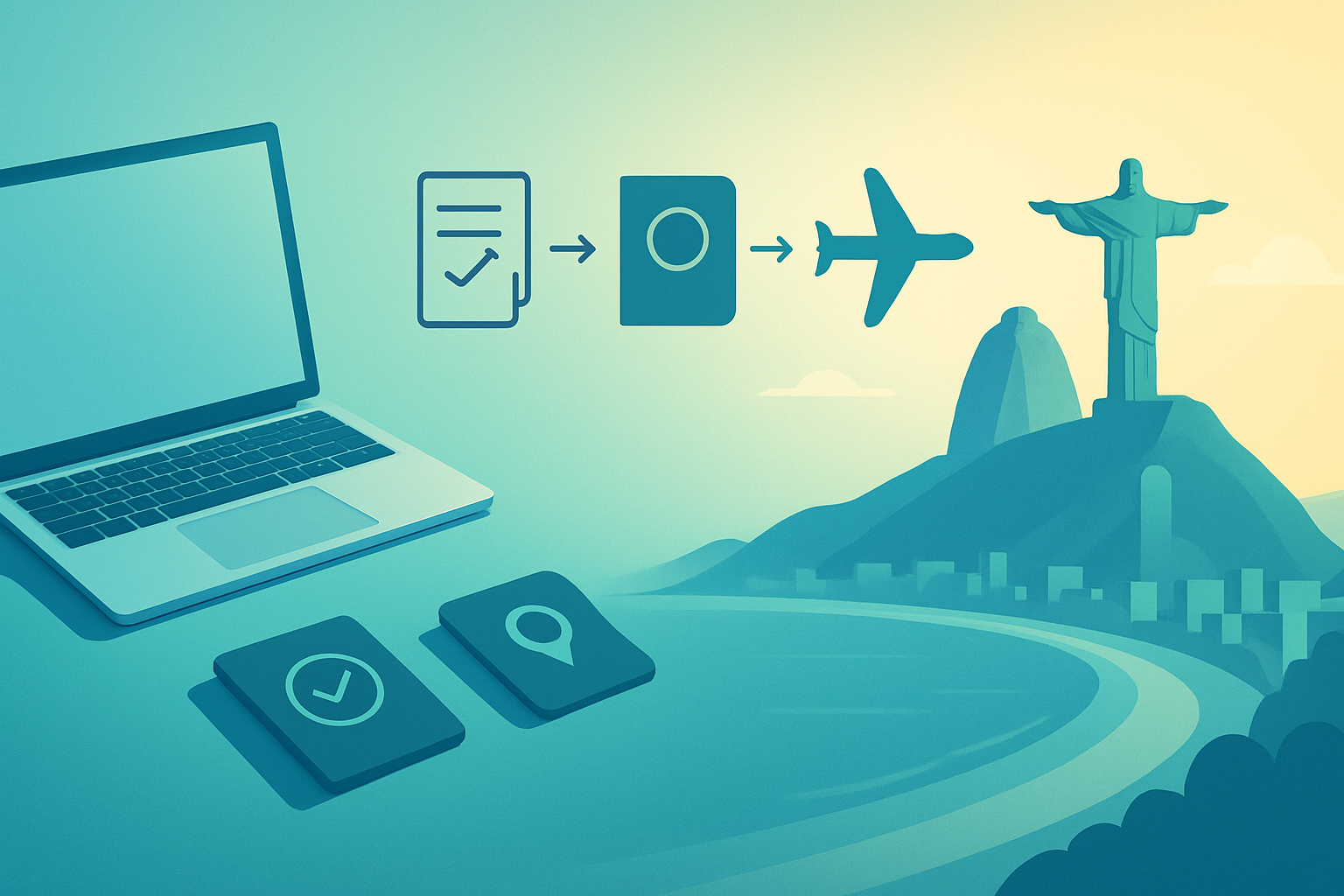
Brazil’s streamlined e-Visa system—launched to modernize entry procedures—applies to citizens of the United States, Canada, and Australia, among other nationalities. If you hold a passport from any of these countries and plan to visit Brazil in 2026, you’ll navigate the digital application process rather than visiting an embassy in person.
Who Must Apply
U.S., Canadian, and Australian citizens traveling to Brazil for tourism, business meetings, or short-term visits require an e-Visa. This applies whether you’re spending a weekend in Rio de Janeiro, exploring the Amazon, or attending a conference. The e-Visa is a travel authorization linked to your passport number—not a physical stamp.
Important note: EU citizens, Argentine residents, and several other nationalities enjoy visa-free entry for up to 90 days. Check Brazil’s official immigration portal (www.gov.br/servicos) to confirm your specific nationality’s requirements before beginning any application.
The Application Process
The e-Visa application is entirely online and typically takes 5–7 business days for approval (though expedited options exist for an additional fee).
Step 1: Visit the Official Portal
Go to the Brazilian Federal Police’s e-Visa system at the official government website. This is the only legitimate channel—avoid third-party visa services unless you require language assistance or have complex documentation.
Step 2: Complete Your Profile
You’ll need your valid passport, a recent digital photo (following specific dimensions), and your travel itinerary. Have your hotel confirmation or address handy.
Step 3: Submit and Pay
The standard e-Visa fee is approximately 100 Brazilian Reais (roughly $20–25 USD). Payment is processed securely online via credit card.
Step 4: Receive Your Authorization
Once approved, your e-Visa arrives via email as a PDF. Print it or save it to your phone—you’ll present it at Brazilian immigration upon arrival.
Pro-Tips for a Smooth Application
Apply early. Submit your e-Visa at least two weeks before departure. This buffer accommodates any document requests and prevents last-minute stress.
Use a clear digital photo. A crisp headshot against a plain background accelerates processing. Blurry or poorly lit photos may trigger requests for resubmission.
Double-check passport validity. Your passport must remain valid for at least six months beyond your intended departure date from Brazil. This is a non-negotiable requirement.
Have your itinerary details ready. Brazilian immigration wants specifics: your first hotel address, arrival date, and flight confirmation. Vague entries can delay processing.
Save all confirmations. Keep copies of your application receipt, approval email, and printed e-Visa in both digital and physical formats.
The e-Visa represents Brazil’s commitment to welcoming international visitors seamlessly. By preparing your documentation thoughtfully and applying with ample time, you’ll clear this administrative step with ease and focus on what matters: planning unforgettable experiences in one of the world’s most dynamic destinations.
Prepare for Airline and Entry Checks
Your journey to Brazil begins the moment you book your flight. Both U.S., Canadian, and Australian carriers—along with major international airlines—have streamlined their pre-departure processes to ensure a frictionless experience for eligible travelers under Brazil’s 2026 visa policies.
Documentation at Check-In
Arrive at the airport with three essentials: your valid passport (with at least six months validity beyond your intended departure date), your airline confirmation, and proof of your visa-exempt status or approved visa. Most major carriers now offer digital check-in options, allowing you to upload these documents 24 hours before departure. This simple step eliminates surprises at the gate and demonstrates preparedness that airlines reward with smoother boarding.
Smart Travel Habit: The Digital Backup
Keep a encrypted cloud copy of your passport’s biographical page, visa approval letter (if applicable), and travel insurance documentation. Brazilian immigration officials appreciate travelers who arrive organized—it’s a mark of respect for their process. Should any document require verification during check-in, you’ll have instant access without fumbling through your carry-on.
What Brazilian Immigration Officers Expect
Brazil’s Federal Police conduct entry checks with remarkable efficiency, particularly at Rio de Janeiro’s Galeão International Airport and São Paulo’s Guarulhos. You’ll be asked standard questions: the purpose of your visit, your accommodation details, and your intended length of stay. Have these answers rehearsed naturally—not memorized robotically.
U.S., Canadian, and Australian citizens benefit from streamlined e-gates at major airports when entering under visa-exempt privileges. These automated kiosks process your biometric data and passport scan in under two minutes. If you’re selected for manual inspection (a routine occurrence, not a red flag), officers simply verify your documents match your stated purpose.
Currency and Customs Declarations
Brazil’s customs allowances are generous for tourists: you may bring personal goods duty-free, plus up to $10,000 USD (or equivalent) in currency without declaration. Amounts exceeding this require disclosure—a straightforward process, not a penalty. Declare honestly; Brazilian officials respect transparency.
Electronics, jewelry, and camera equipment require no special permits for personal use. However, avoid packing anything that appears commercial or in quantities suggesting resale.
Health Documentation (Optional but Recommended)
While Brazil has no mandatory vaccination requirements for U.S., Canadian, or Australian citizens as of 2026, carrying proof of yellow fever vaccination is prudent if you’re venturing into the Amazon or rural areas. This documentation isn’t required at entry, but it’s your passport to accessing certain regions without additional medical appointments.
Ground Transportation from the Airport
Once through immigration, the hardest part is behind you. Major airports offer official taxi stands, ride-sharing apps (Uber and local alternatives), and pre-booked car services—all safe, regulated options. Book your ground transfer in advance through your hotel or a trusted app; this eliminates last-minute confusion and ensures your Rio adventure begins with confidence, not uncertainty.

Where to Stay and Getting Around Rio
Rio de Janeiro rewards visitors who stay intentionally and move strategically through the city. The neighborhoods you choose and how you navigate them directly shape your experience—and your peace of mind.
Neighborhoods Worth Your Time
Copacabana and Ipanema remain the gold standard for visitors seeking beachfront access, excellent restaurants, and infrastructure catering to international travelers. Expect to pay $150–$300 per night for mid-range hotels with reliable service. These areas buzz with foot traffic and visible security presence, making them ideal if you prefer the comfort of crowds and established tourist ecosystems.
Leblon, just south of Ipanema, skews more upscale and residential. Here you’ll find luxury accommodations ($250–$500+), sophisticated shopping on Rua Dias Ferreira, and a local vibe that feels less touristy. The beachfront promenade is impeccably maintained.
Santa Teresa and Lapa offer bohemian charm and authentic nightlife, but require more careful navigation. Reserve these neighborhoods for daytime cultural exploration—colonial architecture, street art, galleries—rather than evening wandering. Stick to main thoroughfares and organized group experiences (walking tours, dining reservations at established venues).
Barra da Tijuca, west of the city center, is modern and safe, with shopping malls and beachfront developments. It’s excellent for families but lacks the historic character many travelers seek.
Smart Transportation Habits
Rio’s public transportation system is extensive and affordable, but directional clarity matters. Download the Moovit app before arrival—it’s the gold standard for real-time bus and metro navigation. The metro system is clean, frequent, and connects major neighborhoods (Copacabana, Ipanema, and downtown). A single journey costs roughly $1.50 USD.
Use registered taxis or Uber exclusively. Yellow cabs summoned from your hotel or app-based rides eliminate ambiguity about pricing and routes. Uber operates seamlessly in Rio and typically costs $8–$15 for in-neighborhood trips.
For longer distances—to Christ the Redeemer, Sugarloaf Mountain, or day trips to Niterói—arrange transportation through your hotel concierge or established tour operators. These aren’t places to experiment with navigation; professionals handle logistics flawlessly.
Walking strategically is part of Rio’s pleasure. The beachfront paths in Copacabana and Ipanema are vibrant and safe during daylight and early evening. Stick to well-lit, populated streets. Avoid displaying expensive jewelry, cameras, or phones while walking anywhere.
Accommodation Strategy
Book accommodations through established platforms (hotels.com, Booking.com, Airbnb with verified reviews). Mid-range hotels offer the best value for security, housekeeping, and local advice—your concierge becomes your most valuable resource for restaurant reservations, transport recommendations, and neighborhood intelligence.
If choosing Airbnb, prioritize recent properties in established neighborhoods with multiple five-star reviews specifically mentioning safety and accuracy.
Rio is best experienced with intention and local knowledge. A well-placed hotel and deliberate movement between neighborhoods transforms your visit from stressful to exhilarating.
A Balanced 7-Day Rio Itinerary and Social, Affordable Experiences
Rio rewards the traveler who balances iconic landmarks with neighborhood depth. This itinerary anchors you in vibrant, walkable zones while keeping costs reasonable and maximizing genuine connection.
Days 1–2: Copacabana & Beachside Rhythm
Start in Copacabana, where you’ll find reliable infrastructure, excellent dining, and a welcoming beach culture. Spend your first morning at the beach itself—swimming, people-watching, and grabbing a água de coco (coconut water) from vendors for R$8–12 ($1.60–2.40 USD). Walk the promenade at sunrise; locals call this caminhada da manhã, and you’ll meet cariocas (Rio natives) living their daily rhythm.
Pro-Tip: Explore the side streets off Avenida Atlântica, where casual botequins (neighborhood bars) serve excellent pastel and caldo de cana (sugarcane juice) at R$5–10 ($1–2 USD). These spots are where Rio feels most authentic.
Days 3–4: Christ the Redeemer, Sugarloaf & Santa Teresa
Day 3 is for the must-sees: Christ the Redeemer and Sugarloaf Mountain. Book tickets online to skip lines (around R$80–100/$16–20 USD each). The view justifies the visit, and going early (before 10 a.m.) means clearer skies and fewer crowds.
Dedicate Day 4 to Santa Teresa, Rio’s bohemian hilltop neighborhood. Stay for lunch at a local restaurante (mains R$35–55/$7–11 USD), browse independent galleries, and catch live choro music at venues like Lapa (just below) in the evening. The electric tram ride up to Santa Teresa costs R$20 ($4 USD) and is an experience itself.
Days 5–6: Ipanema & Social Neighborhoods
Ipanema is pricier but non-negotiable for the cultural immersion. Spend the afternoon at Posto 9, where a mixed crowd of locals, artists, and families gather. Order a chopp (draft beer) at a beachfront quiosque for R$15–20 ($3–4 USD) and observe Rio’s social fabric.
Move inland to the Lagoa neighborhood for Day 6—rent a bike (R$50–80/$10–16 USD for the day) and circle the freshwater lagoon. Stop for lunch at casual spots around the lake, where a generous moqueca (fish stew) costs R$40–60 ($8–12 USD). This area feels less touristy and deeply carioca.
Day 7: Favela Experience & Local Perspective
End with a structured, ethical favela tour in Rocinha or Vidigal (R$120–180/$24–36 USD for small-group tours). Work with established operators who employ local guides and funnel revenue back into the community. This isn’t tourism theater—it’s understanding Rio’s demographic reality and supporting grassroots initiatives.
Budget Snapshot
Daily Spend (excluding accommodation): R$150–250 ($30–50 USD) if you eat where locals eat, use public transport (metro card: R$5–6 per ride), and balance paid attractions with free beach and neighborhood wandering.
Rio thrives on spontaneity and street-level observation. This itinerary gives you structure while leaving room for the serendipitous conversation, the hole-in-the-wall churrascaria, and the sunset moment that becomes your truest memory.
Safety, Smart Travel Habits, and Optional Upgrades
Brazil’s major destinations—Rio, São Paulo, Salvador, and Recife—welcome millions of international visitors annually with well-established tourism infrastructure and security protocols. Like any vibrant city, success here comes from informed choices rather than caution alone.
Smart Travel Habits That Define Your Experience
Stay neighborhood-aware. Rio’s Zona Sul (Copacabana, Ipanema, Leblon) and Centro offer excellent visibility and foot traffic. São Paulo’s Jardins, Vila Madalena, and Pinheiros are equally welcoming. Use Google Maps’ updated street views before exploring, and ask your hotel concierge for current neighborhood insights—they’re your best real-time resource.
Use registered taxis or ride-sharing apps. Uber, Lyft, and local app 99Taxis operate seamlessly across Brazil’s major cities. They’re affordable (a 10-minute Rio ride averages R$25–40, roughly $5–8 USD) and eliminate negotiation friction. Request rides from indoor locations rather than street corners.
Keep copies, not originals. Carry photocopies of your passport, visa approval, and travel insurance documents separately from originals. Store digital copies on cloud services. This is standard practice worldwide and takes five minutes to implement.
Money management with ease. Brazil’s major cities have abundant ATMs and increasingly accept cards everywhere. Withdraw cash during business hours at bank ATMs (Bradesco, Itaú, Banco do Brasil) rather than street machines. Notify your U.S., Canadian, or Australian bank of travel dates to avoid card blocks. Keep roughly R$200–300 (≈$40–60 USD) in small bills for informal vendors and tips.
Optional Upgrades for Maximum Ease
Travel insurance with local medical coverage. While Brazil’s private healthcare system is excellent, international travel insurance covering evacuation and pre-existing conditions costs $3–8 daily for visitors. Companies like World Nomads and SafetyWing integrate seamlessly with visa documentation.
Airport transfers pre-arranged. Rather than navigating ride-apps mid-jet lag, book transfers through your hotel or services like GetTransfer ($25–45 for Rio’s Galeão to Zona Sul). This is peace of mind worth the modest premium.
SIM card or eSIM activation. Purchase a local Vivo, Claro, or Tim SIM card at the airport (≈R$30–50 with data) or activate an eSIM before departure. Real-time navigation and restaurant reservations transform spontaneity into confidence. Most prepaid plans include 5GB–10GB for under $15 USD monthly.
Neighborhood walking tours with licensed guides. Booking a 2–3 hour guided walk through Santa Teresa or Lapa (Rio) or Liberdade (São Paulo) costs R$80–150 per person and provides context, safety in numbers, and local connections. Companies like Favela Tour operate responsibly and directly employ community members.
The Mindset That Works
Brazil rewards the same travel sensibilities you’d apply to Barcelona, Buenos Aires, or Bangkok: awareness without anxiety, preparation without paranoia. The result? A destination where 7+ million international visitors annually discover why Brazilians themselves radiate such infectious optimism about their home.
Conclusion
Brazil in 2026 is more accessible than ever for travelers from the United States, Canada, and Australia. With streamlined visa processes—whether through the simplified e-visa system, visa-free entry for eligible Canadians, or Australia’s reciprocal arrangements—the bureaucratic hurdles that once deterred casual travelers have largely dissolved. The real work now is planning what to experience, not how to get there.
Rio de Janeiro remains the crown jewel, and for good reason. Its combination of world-class beaches, iconic landmarks like Christ the Redeemer, vibrant neighborhoods from Copacabana to Santa Teresa, and a culinary renaissance make it the logical anchor for any Brazilian itinerary. But Rio is just the beginning. The same visa that grants you entry to the Marvelous City unlocks Iguazu Falls, the Amazon, São Paulo’s art scene, and Salvador’s colonial charm—all within one seamless journey.
The key to a transformative Brazil experience is intentionality. Arrive with your visa secured weeks in advance (whether e-visa or traditional), your accommodation booked in neighborhoods that match your travel style, and a realistic sense of pace. Rio rewards both rushed 72-hour visits and month-long immersions; choose your rhythm consciously. Budget accordingly—while Brazil offers exceptional value compared to North American cities, premium experiences (beachfront hotels, private guides, fine dining) command premium prices.
Smart Travel Habits for Maximum Enjoyment
Use registered taxis, ride-share apps, or hotel concierge services for transportation. Stay aware of your surroundings in crowded areas, just as you would in any major global city. Carry copies of your visa documentation and passport separately from originals. Learn basic Portuguese phrases—locals consistently reward the effort with warmth and better service.
Most importantly, engage with Brazil on its own terms. The country’s magic isn’t found in curated tourist zones alone, but in the spontaneous conversations, the street food discoveries, the neighborhood bars where locals gather, and the infectious rhythm of daily life. Your visa is the key; your curiosity and respect are what unlock the experience.
As 2026 approaches, Brazil awaits—simpler to enter, safer to navigate, and as captivating as ever. The question is no longer can you go. It’s when will you?