Introduction
Brazil in 2026 represents an unprecedented opportunity for discerning travelers seeking authenticity without compromise. The introduction of the electronic visa (e-Visa) system marks a pivotal shift in how the world’s most dynamic destination welcomes visitors—streamlining entry while maintaining the meticulous standards that ensure a seamless experience.
For decades, Brazil has captured the imagination of luxury travelers: the sculptural beaches of Rio de Janeiro, the biodiverse majesty of the Amazon, the colonial grandeur of Minas Gerais. Yet logistics often deterred even committed explorers. The new e-Visa system eliminates this friction. Approved applicants now receive digital authorization, eliminating the need for physical passport stamps and dramatically reducing processing time. For most nationalities, approval arrives within days—not weeks.
This guide addresses a sophisticated traveler’s core question: How do I move through Brazil’s entry requirements with intelligence and efficiency, so I can maximize time experiencing the Costa Verde, savoring São Paulo’s culinary renaissance, or navigating the Pantanal’s unparalleled wildlife?
The answer requires three components: understanding the e-Visa mechanics, preparing documentation with precision, and knowing which regional destinations reward your effort. Rio’s Costa Verde—a 150-kilometer emerald ribbon along the southern coast—exemplifies why this matters. Once you’ve cleared entry requirements, you’ll discover colonial villages like Paraty, where cobblestone streets lead to pristine beaches, and hiking trails wind through Atlantic rainforest canopy. But none of this is accessible without strategic planning.
Why 2026 Changes Everything
Brazil’s adoption of the e-Visa system reflects the country’s commitment to organized, secure tourism infrastructure. Unlike traditional visa appointments requiring embassy visits, the digital system operates 24/7. You apply from your preferred location—whether that’s your home office or a hotel in Lisbon—and receive authorization on your device. The system reduces administrative overhead while maintaining rigorous vetting standards.
For Americans, Europeans, and citizens of 92+ eligible nationalities, this represents a democratization of access. A business traveler from São Paulo can authorize entry for a client within hours. A couple planning a month-long sabbatical can finalize entry documentation before their departure briefing.
The Strategic Advantage
Smart travelers understand that visa efficiency isn’t merely bureaucratic convenience—it’s a gateway to deeper exploration. Time saved on administrative processes extends to genuine experiences. It means arriving in Paraty with mental clarity to book a sunset sailing trip, rather than exhausted from paperwork. It means flexibility to pursue spontaneous recommendations from locals: a family-run restaurant in a fishing village, or a guide-led dawn hike to a hidden waterfall.
This guide equips you with the precise, actionable intelligence necessary to navigate Brazil’s entry system, so your journey begins the moment you clear security—not at a consulate desk. Because in Brazil, the adventure doesn’t wait. It beckons from every direction: coastal cliffs, urban galleries, rainforest canopies, and the generous spirit of a nation eager to share its treasures.

Who Needs an e‑Visa and Key Exemptions
Brazil’s e-Visa requirement applies to most international travelers, but understanding who qualifies—and who doesn’t—is your first smart move when planning a 2026 trip.
Who Must Apply for an e‑Visa
Citizens of approximately 200 countries require an e-Visa to enter Brazil for tourism, business meetings, or short-term visits. This includes travelers from the United States, Canada, Australia, most European nations, and the United Kingdom. The application is straightforward: completed entirely online through the official Brazilian e-Visa portal, processed within 3–7 business days, and costs approximately USD $100 (roughly BRL $500–550).
The e-Visa grants a single or double entry (depending on your choice during application) and permits stays of up to 90 days—ideal for exploring everything from Rio’s iconic coastline to the lush landscapes of Costa Verde without the hassle of a traditional consulate visit.
Key Exemptions Worth Knowing
Several nationalities enjoy visa-free entry to Brazil and may travel for up to 90 days without any advance documentation:
- Mercosur citizens: Argentina, Paraguay, and Uruguay passport holders
- Associate members: Bolivia and Chile residents
- Special agreements: Portugal, Equatorial Guinea, and Timor-Leste nationals
Additionally, if you hold a valid Schengen visa, a US visa, or a recent Brazilian visa stamp in your passport, you may qualify for expedited processing or exemptions—always verify current status on the official portal before booking.
A Smart Travel Habit: The Passport Rule
Ensure your passport has at least six months of validity beyond your planned departure date. Brazilian immigration takes this seriously, and it’s the single most common preventable issue at entry. Check this detail the moment you book your flight, not two weeks before departure.
When to Apply
Apply for your e-Visa 6–8 weeks before travel. This timeline accounts for processing time plus any unforeseen delays. Even though approval typically arrives within a week, building in buffer time is the hallmark of seasoned travelers—it eliminates last-minute stress and keeps your itinerary on track.
Documentation You’ll Need
Gather these items before starting your application:
- Valid passport (digital copy)
- Recent passport-style photo (digital)
- Return flight confirmation or onward travel proof
- Proof of accommodation (hotel booking or address)
- Emergency contact information
The entire process takes roughly 20 minutes online. No consulate visits, no paperwork, no middlemen fees.
Special Consideration: Business vs. Tourism
If you’re attending a conference in São Paulo or meeting clients, ensure you select “business” as your purpose during application—even if your trip includes leisure time. Brazil’s immigration distinguishes between categories, and accuracy prevents complications at entry.
Planning ahead with clarity on visa requirements transforms what could be an administrative burden into a simple, five-minute task you’ll complete during your morning coffee. Once your e-Visa is approved, your focus shifts entirely to the real adventure: experiencing Brazil’s world-class beaches, vibrant culture, and warm hospitality.

How to Apply: Portal, Timing and Fees
Brazil’s e-visa system is refreshingly straightforward—a digital-first process designed to eliminate queues and paperwork delays. The entire application happens through a single, intuitive online portal, meaning you can apply from your favorite café, your home office, or even poolside at your hotel weeks before departure.
The Official Portal
Visit www.visabrasil.gov.br, the official Brazilian government e-visa platform. The interface is available in Portuguese, English, Spanish, and French. You’ll need a valid passport (with at least six months’ validity beyond your intended stay), a recent digital photograph, and a credit or debit card for payment. Most travelers complete the form in under 15 minutes.
Timing: The Smart Window
Apply between 60 and 7 days before your departure. This window isn’t arbitrary—it allows Brazil’s immigration authority adequate processing time while keeping your approval fresh and valid. If you’re the type who books flights last-minute, you can submit your application up to 7 days before arrival, though this adds unnecessary stress. The coveted sweet spot? 30–45 days in advance. This gives you breathing room for any clarification requests (rare, but possible) and ensures your approval arrives well before you pack.
Processing typically takes 3 to 5 business days, though many applications receive approval within 48 hours. You’ll receive email confirmation of your approval; there’s no physical document to collect or stamps to obtain. Simply show your digital approval to your airline at check-in and to Brazilian immigration upon arrival.
Fees: Transparent and Reasonable
The e-visa costs USD 100 for most nationalities, payable via the portal at the moment of application. Your payment locks in your application and generates a receipt—keep this for your records, though your email confirmation is your primary proof. Credit cards (Visa, Mastercard, American Express) and select debit options are accepted globally.
This is a single, non-refundable fee. There are no hidden charges, processing fees, or expedited tiers. What you see is what you pay.
Pro-Tips for a Seamless Application
Photo requirements matter: Ensure your digital photo meets specifications (white background, face clearly visible, taken within the last six months). A blurry or off-center image can trigger a request for resubmission, delaying approval.
Double-check your passport number and spelling. Typos here are the leading cause of application holds. Read every field twice before submitting.
Use a reliable internet connection when uploading documents. A dropped connection mid-upload wastes time; apply from a stable WiFi network.
Keep your confirmation email secure. Screenshot it, save it to your phone, and email it to yourself. This redundancy ensures you have proof of approval even if your primary device dies.
Once approved, your e-visa is valid for 90 days from the approval date. You can enter Brazil multiple times during this window—ideal if you’re island-hopping through the Caribbean before heading to Rio or the Amazon.

Documents, Copies and Digital Backups
A seamless Brazilian adventure begins long before you board your flight. The cornerstone of stress-free travel is a thoughtfully organized document strategy—one that protects your peace of mind while keeping critical information accessible.
The Essential Document Checklist
Your physical passport is non-negotiable, but treat it as one layer of a multi-layered approach. Carry your original passport in a secure travel wallet, separate from daily cash and cards. Before departure, photograph both the data page and your approved e-visa confirmation page with your smartphone. Store these images in a cloud service (Google Photos, iCloud, or Dropbox) that you can access from any internet connection—critical if your phone is lost or stolen.
Print two physical copies of your passport’s biographical page and e-visa approval letter. Store one in your checked luggage and one in your carry-on, separate from your original documents. This redundancy has saved countless travelers when documents are misplaced at security checkpoints or hotel safes.
Digital Organization for Rio and Beyond
Create a dedicated folder in your cloud storage labeled “Brazil 2026 Travel Documents.” Include:
- Scanned copies of your passport (front and back)
- E-visa confirmation with approval number and validity dates
- Travel insurance policy and emergency contacts
- Hotel reservation confirmations
- Domestic flight bookings (if traveling beyond Rio to Costa Verde)
- Vaccination records (yellow fever documentation is recommended for certain regions)
- Credit card numbers and bank contact information (stored separately from the cards themselves)
This approach means that even if your physical documents are compromised, you have instant proof of your legal status in Brazil and can access critical information from any café with WiFi.
Smart Travel Habits for Document Security
Keep your original passport in a hotel safe or, if your accommodation lacks one, in a hidden compartment of your luggage rather than carrying it daily. In Rio and other major cities, carry only a photocopy for routine identification purposes—this is a widely accepted practice and significantly reduces risk exposure.
Avoid photographing or scanning documents in public spaces. Use your hotel room or a private location. When uploading to cloud services, ensure you’re using a secure WiFi connection (your hotel’s network, not open public WiFi).
Update your emergency contacts list with your country’s embassy in Brazil. The U.S. Embassy in Rio de Janeiro can be reached through the State Department’s website; similar resources exist for citizens of other nations. Share this information with a trusted contact at home.
The Final Check
Before your departure date, verify your e-visa status online using your approval number. Confirm that your passport has at least six months of validity remaining beyond your intended departure date from Brazil—this is a standard requirement and prevents last-minute complications.
A few hours of preparation transforms document management from a source of anxiety into a non-issue, leaving you free to focus on what matters: experiencing Rio’s stunning landscapes, vibrant culture, and the welcoming spirit of Brazil.

Plan Smart: A Focused Rio + Paraty Itinerary and Logistics
A Rio + Paraty itinerary captures Brazil’s most magnetic contrasts: urban energy and colonial serenity, mountain vistas and Atlantic coves. Here’s how to orchestrate five to seven days that feel both curated and spontaneous.
The Route
Start in Rio de Janeiro (3 nights minimum). Anchor yourself in Zona Sul—Copacabana, Ipanema, or Leblon—where most amenities, restaurants, and cultural venues cluster within walking distance or a short Uber ride. This geography eliminates logistical friction and maximizes your time for the experiences that matter.
On day four, head south to Paraty (2–3 nights). The 240-kilometer coastal drive takes approximately four hours via BR-101. Travel by car rental, organized tour, or private driver; all three options are straightforward to arrange through your hotel concierge or apps like Airbnb Experiences. The journey itself is spectacular—you’ll hugging mountainside curves with Atlantic glimpses—so resist the urge to rush.
Rio’s Essential Layer
Dedicate your first full day to the iconic pillars: Christ the Redeemer and Sugarloaf Mountain. Book tickets online 48 hours ahead (Cristo Redentor costs roughly R$88; Sugarloaf, R$140 per cable car). Go early, by 8 a.m., to beat crowds and haze. This single-day investment clears your schedule for richer exploration: the Botanical Garden’s orchid greenhouse, a favela tour with a local guide (Vidigal and Santa Marta offer transformative perspectives), or simply lingering in Ipanema’s neighborhood rhythm—café culture, bookshops, sunset drinks at a boteco.
Paraty’s Cadence
Paraty is tactile and navigable on foot. The colonial center’s cobblestones and pastel facades demand slow time. Spend one morning wandering, visiting the Igreja de Santa Rita (Brazil’s oldest surviving church dedicated to women), and eating fresh seafood at waterfront tables.
Reserve one full day for the Emerald Coast boat tour—a half-day excursion visiting hidden beaches and jungle coves, with swimming stops and fresh caipirinhas. Operators cluster near the harbor; half-day tours cost R$150–R$250 per person and depart mornings around 9 a.m.
Your final evening should be unscheduled. Dine where locals do (ask your pousada owner), explore side streets as the light softens, and let Paraty’s quieter rhythm settle in.
Logistics That Work
Book accommodations in advance, especially in December–January. Mid-range pousadas in Paraty run R$250–R$400 per night; Rio’s Zona Sul hotels, R$350–R$800. Both regions have excellent mid-range and luxury options.
Use ride-sharing apps (Uber, 99) in Rio; Paraty is walkable, though taxis and pre-arranged drivers handle longer trips. Purchase travel insurance that covers medical care—it’s inexpensive and prudent.
Ensure your e-Visa is approved well before travel; processing typically takes 5–7 days. Have digital and printed copies of your approval.
This rhythm respects both structure and spontaneity, letting you experience Brazil’s sophistication without the strain of over-planning.
Pairing Visa Prep with Curated Experiences
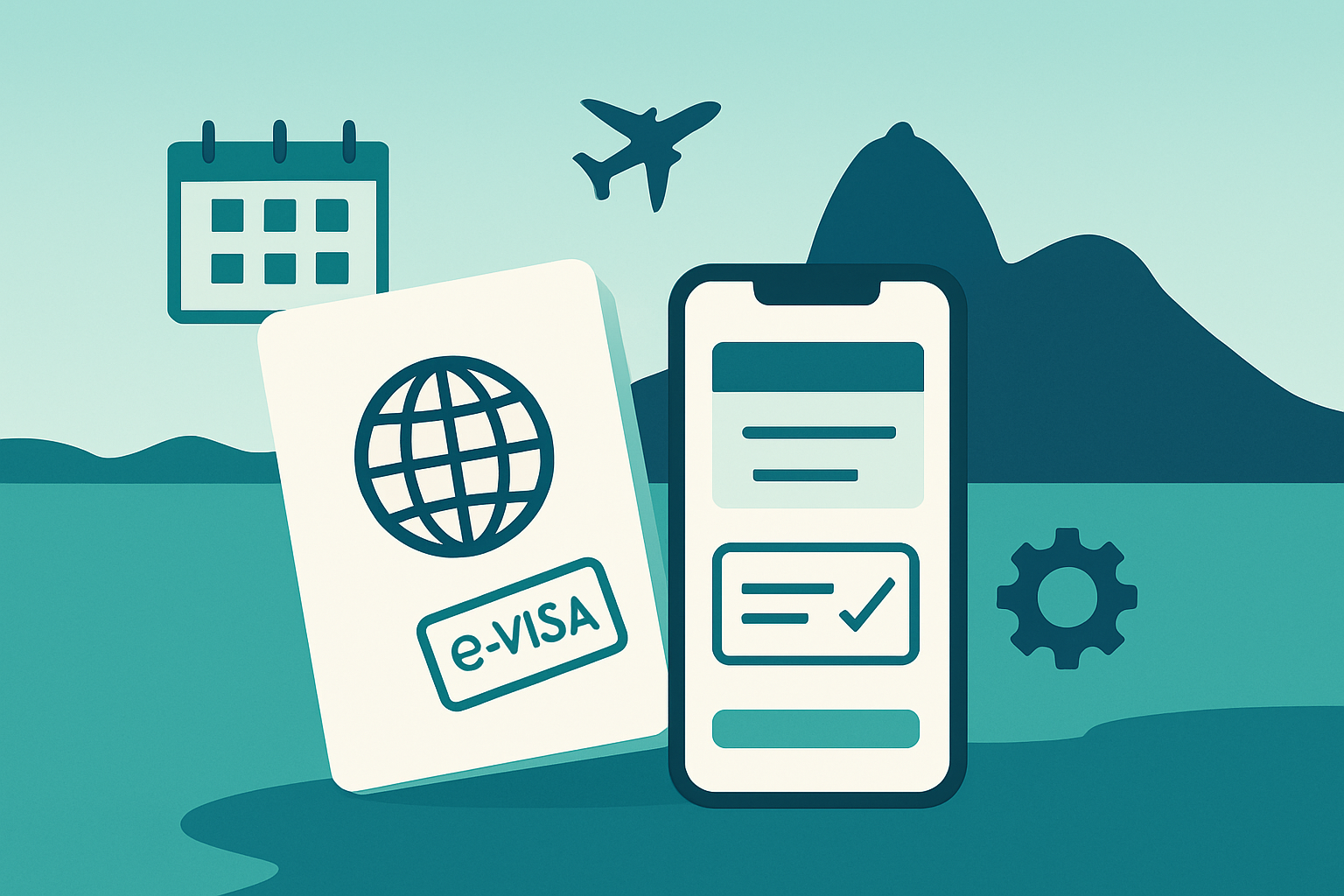
The beauty of securing your Brazil e-Visa well in advance isn’t just peace of mind—it’s strategic freedom. With your documentation submitted and approved weeks before departure, you gain the luxury of crafting an itinerary that truly reflects your travel ambitions, rather than scrambling last-minute.
Build Your Timeline Around Visa Approval
Submit your e-Visa application at least 30 days before your intended arrival. This buffer allows you to receive approval confirmation, then book flights and accommodations with absolute confidence. Once approved, your visa is valid for entry within a 90-day window—use this window to coordinate with boutique tour operators, secure reservations at sought-after restaurants, and arrange private experiences that book weeks ahead.
Strategic Route Planning: Rio to Costa Verde
With visa logistics locked, you can focus on the journey itself. The Costa Verde (Green Coast) stretches south of Rio and demands deliberate planning. Direct your first 2–3 days to Rio’s iconic neighborhoods—Ipanema, Copacabana, and the historic Lapa district—before heading south. This sequencing ensures you’re acclimatized and settled before venturing to the quieter, jungle-backed coastal towns of Paraty and Angra dos Reis.
Consider booking a boutique pousada in Paraty (roughly 4 hours south of Rio) for 3–4 nights. This 17th-century colonial port town offers hiking to hidden waterfalls, island-hopping boat tours, and world-class seafood—experiences that require advance reservations, particularly during peak season (December–March).
Smart Booking Tactics
Once your visa is confirmed, prioritize:
- Accommodation: High-end pousadas and small luxury hotels fill quickly. Book 6–8 weeks prior for December–February travel.
- Dining: Rio’s Michelin-starred restaurants and beachfront churrascarias often require reservations. Plan your culinary calendar early.
- Activities: Private boat tours in the Angra dos Reis archipelago, hiking guides, and spa treatments at luxury resorts should be pre-arranged.
Pro-Tip: Currency and Payment Readiness
While securing your visa, simultaneously arrange currency exchange or notify your bank of your travel dates. Brazilian ATMs are widely available in cities and towns, and most establishments accept cards—but having local currency (Real) for smaller vendors and tips ensures seamless transactions alongside your curated experiences.
The Confidence Factor
Travelers who prepare visa documentation early report spending significantly less time on logistics and more on authentic engagement. You’ll have mental space to learn basic Portuguese phrases, research local artisans in Paraty, and identify lesser-known beaches along Costa Verde—the experiences that transform a trip into a memory.
Your e-Visa isn’t a hurdle; it’s your entry ticket to intentional travel. Secure it early, plan boldly, and arrive in Brazil fully prepared to savor every moment.
Conclusion
Brazil’s e-Visa system represents a significant evolution in travel accessibility, removing friction from entry requirements while maintaining security standards. For travelers planning 2026 journeys to Rio’s Costa Verde and beyond, the investment of time in advance planning—securing your e-Visa weeks before departure—transforms the entire experience from logistically fraught to seamlessly organized.
The sophistication of Brazil’s digital infrastructure mirrors the country’s emergence as a world-class destination. By applying online, you’re not simply completing bureaucracy; you’re entering a streamlined ecosystem designed to welcome intentional travelers. The modest application fee and brief processing window position the e-Visa as a negligible cost against the richness of what awaits: emerald rainforests, colonial architecture in Paraty, crystalline beach communities, and the electrifying energy of Rio itself.
Smart Habits That Amplify Your Experience
Think of pre-arrival planning as an investment in presence. When visa logistics are handled weeks in advance, you arrive mentally prepared to absorb experiences rather than troubleshoot paperwork. Keep digital and physical copies of your e-Visa approval in separate locations. Screenshot your approval letter; email it to yourself. This redundancy is less about paranoia and more about confidence—you can focus on the present moment knowing documentation is secure.
Register with your embassy before traveling. This isn’t alarmism; it’s a smart habit that transforms an unlikely emergency into a manageable situation. Should you need assistance, your government already has your itinerary and contact information.
The Bigger Picture
Brazil’s investment in modernized entry systems signals confidence in its tourism infrastructure. Cities like Rio, São Paulo, and Salvador have refined hospitality to an art form, with world-class hotels, restaurants, and cultural institutions. The e-Visa doesn’t just ease entry—it reflects a nation committed to welcoming travelers on professional terms.
Your 2026 itinerary to Costa Verde—whether you’re anchoring days in Rio, exploring the bohemian charm of Paraty, or discovering hidden beaches in Angra dos Reis—begins the moment you submit your e-Visa application. That single action sets intention and opens possibility.
The convergence of simplified entry requirements, robust infrastructure, and genuine warmth from Brazilian communities creates an unmatched travel proposition. Plan methodically, execute with intention, and arrive ready to be transformed by one of the world’s most vibrant destinations.
Brazil is waiting.